

Page 1
Why can’t people sleep when they get old?
The link between sleep, pain and vitality in older adults from the craniosacral system
In exploring the mysteries of aging and health, craniosacral therapy provides a unique holistic perspective of the mind and body. It regards the human body as a functional whole, which runs from the skull to the sacred vertebrae and is governed by the cerebrospinal fluid rhythm. Thinning sleep, declining mobility and lingering chronic pain in older adults are not isolated phenomena, but often intertwined with the decline of the same internal rhythm of life, the cranioskeletal system.
Page 2
Understanding the Core of Life
Rhythm: Craniosacral System
The cranio-skeletal system is an elaborate network of functions that consists of the skull, spine, skeletal bones, cerebrospinal fluid, meninges and fascia. At its core is the rhythmic flow of cerebrospinal fluid like a tidal wave (6-12 times per minute), known as the “craniosacral rhythm.” It is the basic rhythm that nourishes the central nervous system, regulates stress and drives repair. This “tide” rises during deep sleep, and efficiently cleaning the brain’s metabolic waste is a crucial time for physical and mental repair.
How time changes tides: The common root of sleep, pain, and decline in mobility
As age increases, this system undergoes functional changes,
Page 3
Its impact spreads like ripples, collectively affecting sleep, pain perception, and daily vitality.
Structural rigidity, pain cycle and rhythm attenuation
The physiological weakness of the chain between the skull and the sacred bones is reduced, as if the bearings of the system become stiff. Not only does this directly weaken the dynamics of the craniosacral rhythm, affecting brain cleanliness and neural drive, but crucially, this systemic decrease in dynamics leads to dehydration and adhesion of the fascia network and a decrease in the responsiveness of the musculoskeletal system. Stiff fascia itself can become a source of pain (e.g., fasciitis) and also cause abnormal joint load, exacerbating degenerative lesions, resulting in a “structural stiffness chronic pain activity decreases circulation worse.” ” The closed loop. Pain signals themselves continue to stimulate the nervous system, further disrupting internal rhythms.
Disruption of neural hubs and pain sensitization
Page 4
The base of the brain is a crossroads of nerves. Long-term chronic pain or tension can cause the fascia of the skull to continue to pressure the nerves that have passed through since, including the vagus nerve. It causes the body to fall into a vicious cycle of “pain-stress”: pain triggers sympathetic nervous system excitation (a state of stress), and this constant state of tension lowers the pain threshold and makes the person more sensitive to pain. This makes it difficult for older people to relax and fall asleep at night free from pain distractions, and to tense muscles and move cautiously during the day due to constant pain alerts, which increases stiffness and fatigue.
Loosening of the anchor of action: co-misalignment of sleep, pain, and function
Disruption of the skull base structure can simultaneously interfere with the sleep center upward and affect nerves controlling sensation and movement downward. This leads to:
*Rhythmic dysregulation: Weak craniosacral rhythm leads to both weakened “nighttime repair” and “daytime activity.” Pain is more easily perceived at night, while during the day it consumes significant neural energy normally allocated for normal activities.
Page 5
Pain-Stability-Loss-Insomnia Cycle: Tension from the skull base and neck can spread throughout the body, causing or worsening pain; pain interferes with sleep quality; and poor-quality sleep significantly reduces pain threshold and weakens daytime pain tolerance and motor control, forming an entrenched cycle where all three worsen mutually.
*Blurred proprioception: Systemic imbalance and chronic pain interfere with each other, weakening the body’s spatial perception and coordination abilities. This not only increases the risk of falls but also prevents the brain from entering deep, peaceful rest during nighttime due to processing disordered pain and positional signals.
Tension memory and reduced system resonance
Lifetime physical and emotional stress, including chronic pain experiences, is stored in the system’s muscular network in the form of “tissue memory,” which creates a continuing context of stress and pain. At the same time, the unbalanced craniosacral rhythm and the weakened resonance of the body’s biological clock have disrupted the body”s natural anti-inflammatory and repair cycle (mostly at night), further reducing the body’ ability to relieve pain and promote repair.
Page 6
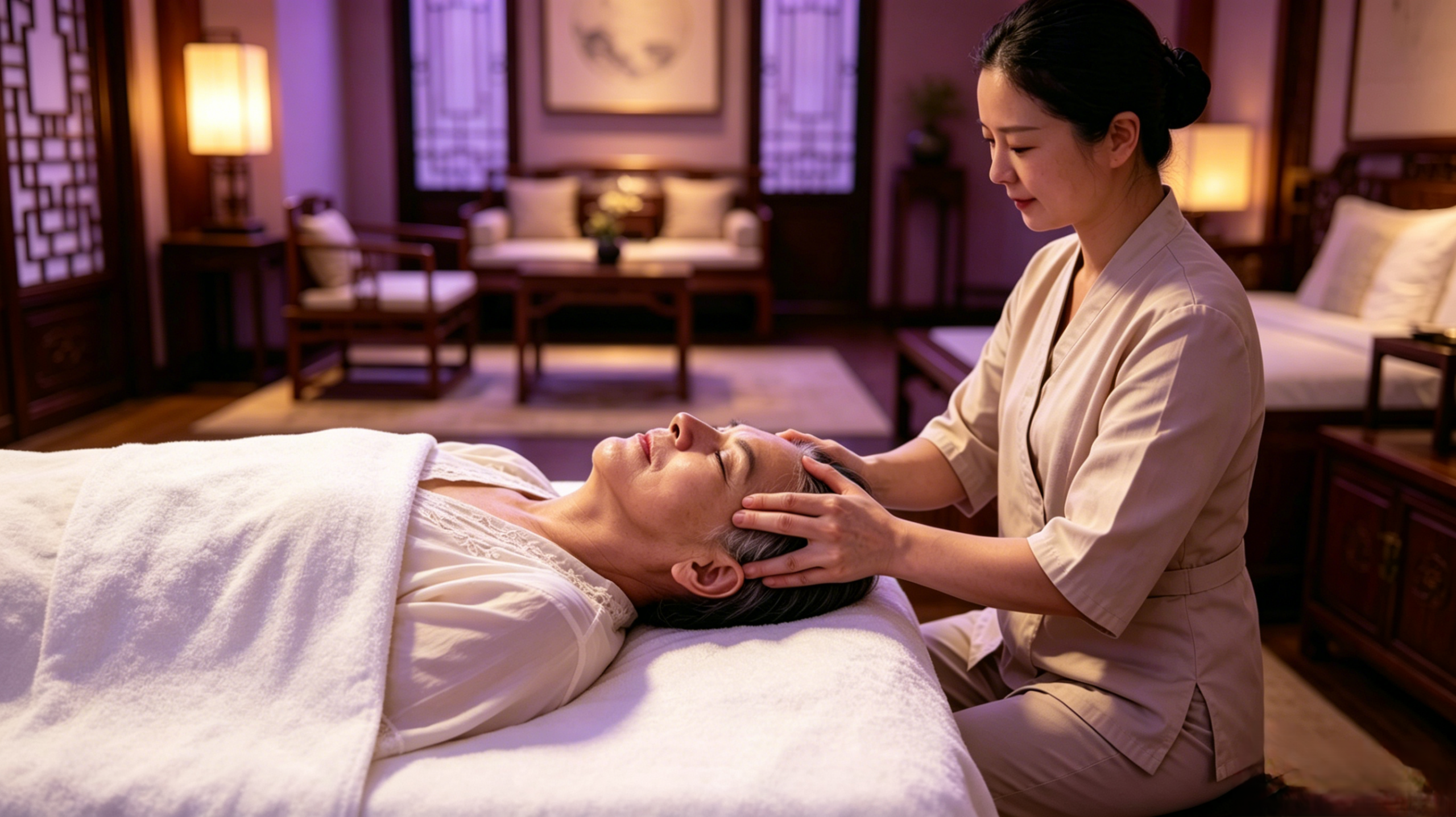
Re-balance of Tides: The Holistic Adjustment Approach for Craniosacral Therapy
Craniosacral therapy does not isolate the “treatment” of insomnia, pain, or weakness, but rather aims to restore the smoothness, completeness, and coordination of the entire craniosacral system, creating foundational conditions for self-regulation of body and mind.
The conditioning idea involves releasing the system’s locks: releasing the strain of the fascia in the base of the skull, the sacred bones, and pain-related areas in a very gentle manner, breaking down ” The structural stiffness-pain cycle promotes the optimization of fluid circulation and neural conduction. It also involves reconciling internal rhythms: sensing and guiding the individual’s own craniosacral rhythm to help restore a full, symmetrical pulse. A more coordinated, powerful inner rhythm helps regulate the excitability of the nervous system, thereby regulating pain perception at its root. At the same time, attention is focused on relieving the nerves and rebuilding perception: by relaxing key areas and rewiring parasympathetic nervous system nervous system nerves, reducing tension and pain sensitivity throughout the body, and optimizing propriosensory input that is interfered with by pain signals. That’s both.
Page 7
Create a calm neural environment for sleep and provide a clear internal map for safe and confident activities. The ultimate goal is to integrate the core axis: adjust the mechanical relationship between the skull and sacrum, restore the fluid dynamic balance of the spine, reduce abnormal joint pressure, thereby enhancing overall stability and comfort.
Conclusion: The Symphony of the Whole
When the inner rhythm regains strength and coordination, the nervous system can more clearly distinguish real threats from past memories. Manage pain signals more effectively and feel more at ease“A switch between “sober action” and “deep rest” promises calmer nights, less pain and a more restful, light day.
It is not about fighting aging, but about improving quality of life. From the perspective of the craniosacral system, the reduction in sleep, chronic pain, and decline in mobility experienced by elderly people often stem from the same root and interweave with each other.
Page 8
The manifestations of dysfunction. They jointly compose a symphony of dysfunction, composed of structural changes, neuroplasticity, rhythm disorders, and stress accumulation.
Therefore, often when craniosacral therapists treat chronic pain areas in elderly individuals, their sleep, mobility, and mental state will significantly improve.