

Page 1
What is revealed in Chinese characters
Fascia and Meridians
Page 2
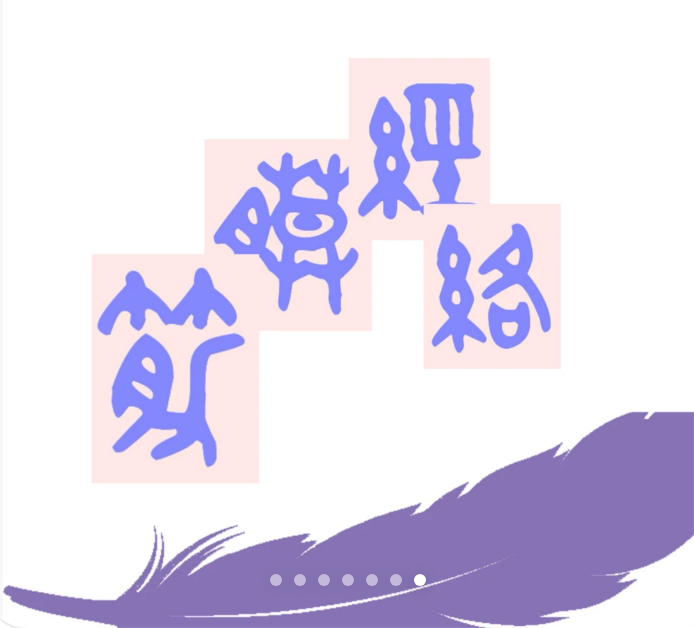
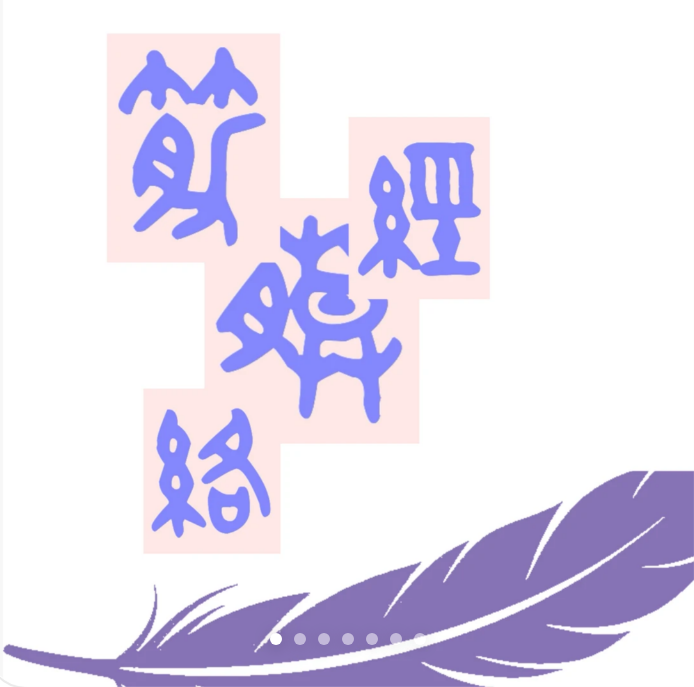
As carriers of Chinese civilization’s genes, Chinese characters contain profound ancient knowledge about human body science through their writing methods. Taking the four characters ‘jin’, ‘mian’, ‘jing’, and ‘luo’ as examples, by using logographic, phonetic, and associative forms, one can reveal the cognitive connection between traditional Chinese medicine and the human connective tissue system and the network of qi and blood circulation.
Page 3
The word “sheng” is written as “sheng” in Chinese script, and is a phonic word, above “bamboo” and below “meat” (moon). “Bamboo” is derived from the tough fiber bundles of bamboo stem, which refers to the elasticity and supportiveness of tendons, ligaments and other tissues, and the so-called “force of flesh” in the Interpretation of Script emphasizes its mechanical properties. On the side of the word “meat” it is clearly human connective tissue. This “like-like” thinking comparing human tissue with natural characteristics makes “strength” not only refers to specific anatomical structures (such as a rope-like tissue like beef slack), but also abstracts the functional properties of “flexible and robust,” consistent with the theory of “the liver main strength” and “the muscle main movement” in Chinese medicine.
Page 4
The construction of the words “railway” and “network” focuses on the functional network of the operation of air and blood. The word “jing” comes from the “wire” (silk) “witch,” and the “wire,” which refers to water, is extended to the “longitudinal main path,” as the line of woven cloth runs up and down, corresponding to the flow of twelve meridians. The Book of Chakras says ” Those with the meridians can therefore live forever and be resistant to a hundred diseases, “emphasising their stability and regularity as the main blood and blood vessels. The word “network” comes from the sound of “chain” and “each,” and “each” is like a foot to a door, and is extended to “branch” and “connection.” If the eye of a rope is dense and wide, it refers to the horizontal branch of a network from a serious branch, and the so-called “branch and horizontal is a network” in the Holy Spirit of Pulse indicates its hierarchical character.
Page 5
It is worth noting that the terms “musculoskeletal” and “meridian” imply the unification of “structure-function” in wordmaking logic. The “stem” and “membrane” emphasize physical tissue (connective tissue system) next to “meat,” and the “meridian” metaphorically refers to functional channels (airways and blood circulation network). However, in TCM theory, the two are often interdependent: fascia, as the collective name for tendons, ligaments, and membranes, constitutes the anatomical basis of the circulation of the meridians, such as the “meridian” system described in the “Spiritual Guide” which refers to the anatomy of the muscle and overlaps with the path of the pulse. The blood and blood circulation of the meridians depends on the maintenance of the interstitial membrane gaps, such as the “Three hundred and sixty-five acupuncture sessions of the Sun’s meridians,” which implies that the meridian penetrates the whole body through the membrane network. This understanding of “carve air with form, and foster form with air” is expressed in word construction as the coordination between “meat” and “chain” – the former is the material carrier of the latter, and the latter is the functional embodiment of the former.
Page 6
From the perspective of writing, the ancient people constructed a cognitive model of the human fascia nervous system with natural imagery such as the toughness of “bamboo,” the cover of “sunset,” the order of “silk,” and the branch of “foot.” This thinking, which unifies specific anatomical structures (musculosis) and abstract functional networks (meridians) through literal symbols, also reflects“Take yourself close, Away from the things ” Similar thinking wisdom has also provided insight into modern understanding of the connection between human connective tissue and the neural-fluid regulation network – as has been discovered in fascia studies, The collagen fiber network in the fascia is highly compatible with the circulation of meridians, and its mechanical conduction and information transmission function may be considered a modern scientific footnote to the ancient concept of “meridian.”
Page 7
The character creation method here is not only the construction rule of linguistic symbols, but also the key to unlocking the treasure trove of ancient people’s life cognition; its system thinking and analogical logic still inspire us today on deeper paths for exploring the mysteries of the human body.