

Page 1
The girl who practiced her back looked at this.
The middle section of the chest is stiff due to long-term low head, and blindly practicing the back is counterproductive. The correct way is to relax and activate before intensifying the training.
Page 2
Let’s start by looking at your mid-section of the chest vertebrae. Stiffness and limited movement in areas typically centered on the 4th to 8th vertebrae (T4-T8) are symptoms of the typical “mobile back” or “upper cross syndrome” that occurs in modern people due to long-term poor posture, especially cell phone addiction. Most people focus only on the vulva. From the perspective of a craniotherapist, the problem in the lower, middle portion of the vulva is the key. This is not only muscle fatigue, but also the intersensory activation of this region that leads to an imbalance in the deeper fascia system.
I. Cause Analysis: How Mobile Phones “Lock” Your Back
When you look down at your phone, your body undergoes a series of chain reactions that ultimately lead to problems in the illustrated area:
1. Head tilt and force line change: For every inch the head tilts forward, the weight exerts nearly double the load on the cervical spine and upper back. This massive pulling force is primarily borne by muscles and ligaments at the C7-T1 junction, which is the first point subjected to pressure — the ‘sacrifice point’.
Page 3
2. Compensation and downward conduction of pressure: When the cervicothoracic junction (C7-T4) becomes rigid, it loses its normal mobility. In order to complete daily movements such as breathing and turning, the body must compensate for the middle thoracic spine (T4-T8). This area, which was once an important anchor of the pleural fascia, was now forced to undergo additional pressure and friction.
3. Alveolic adhesion and loss of mobility: Persistent abnormal tension can cause microscopic tears and inflammation of the membrane (the connective tissue network that encompasses muscle, internal organs, and nerves) in the region. To protect itself, sympathetic nervous systems are hyperactivated so that the body in this region acts like a wound repairer, depositing more collagen between the fascia layers to form adhesions. It’s like a smooth silk shirt that gets stuck in syrup, becomes stiff and loses its elasticity. This is the visceral adhesion of the fascia that you feel as “stiff” and “unable to move,” rather than just muscle tension.
4. Obstruction of craniosacral rhythm: From an holistic perspective, the T4-T8 region is an important pathway for transmitting the craniosacral rhythm (the core driving force of life) from the head to the trunk and internal organs. The adhesions here resemble building a dam on a river, obstructing smooth flow of the rhythm and affecting overall health and self-healing ability, further solidifying tension states.
II. However, you have started “back training”
Page 4
When the 20-year “phone age” becomes average, regardless of age, posture problems caused by phones have become a common phenomenon, thus “back training” begins to gain popularity.
However, if the tension areas of the middle thoracic spine nerves are not released and activated before performing strength training, it will indeed cause a series of problems, not only with poor results but also more prone to injury.
1. Exacerbation of compensatory movements leading to shoulder and neck strain and pain
This is the most direct and common issue. Tense muscles are like ropes “frozen,” unable to extend or contract normally.
When doing push-like movements (such as push-ups, push-ups): Tight pectoral muscles and shoulder lift muscles pull your shoulder bladders forward, preventing them from maintaining the correct posture of “steady pulling” during the movement. In order to perform your movements, your shoulder and cervical spine are subjected to additional pressure to compensate, which is highly likely to cause shoulder impingement (shoulder pain), cuff injury, and cervical discomfort. After a while, the back sun appeared to show signs of training, but the curvature became straighter, and the pelvic problems became more and more prominent. Various pain problems followed.
When doing pulling movements (e.g. rowing, pulling up): the mid- and lower-slope square muscles and the trapezoid muscles that should dominate their vigor are stretched longer ” Memory loss “can’t be effectively recruited,” while the tense trapezium pectoris and shoulder lift muscles overcompensate, trying to lift the shoulders up. The result is that after practicing, the back is sore with the neck and upper trapezia, but there is no feeling in the back. The training is extremely efficient
Page 5
Low.
2. Strengthening and solidifying incorrect postures runs counter to fitness goals; fitness is supposed to improve posture, but in this case, it will backfire.
Direct strength training, especially under a rounded-shoulder and hunched-back posture, will further strengthen already tense muscles (such as pectorals and trapezius).
Weak muscles (mid-back and lower back), unable to be properly recruited, remain weak. This imbalance between strong and weak muscle groups will further exacerbate, leading to your rounded shoulders, hunched back, forward head “phone body posture” becoming firmly established, even more severe than before training. This completely contradicts the original intention of improving physique.
3. Incorrect movement patterns increase risk of sports injuries
When the range of motion in major joints (thoracic spine, scapula) is limited, the body forces other joints to overuse as compensation for completing movements.
Cervical stiffness: In actions requiring rotation or extension (such as throwing or overhead squats), insufficient range of motion in the cervical spine forces the lumbar and cervical spines to perform excessive compensatory movement, greatly increasing the risk of lower back pain and neck sprains.
Unstable scapula: As mentioned above, an unstable scapula is the root cause of shoulder injury. Any action requiring arms overhead (e.g., shoulder press) becomes exceptionally dangerous.
Page 6
4. Training effectiveness is half effort, yet even stagnation may occur
Since the correct target muscle groups cannot be activated, training stimulation is not effective enough, resulting in significant reduction in muscle gain and body shaping effects.
At the same time, due to the presence of compensatory patterns, you find it difficult to increase load; your strength level easily hits a bottleneck, or you may be unable to continue training due to pain.
The correct process should be:
Step 1: Release and Unfreeze (“Thaw”)
When sympathetic nervous system nervous system overactivation is involved, conventional release tools are ineffective; it is best to use gentle techniques such as craniosacral therapy or neuromuscular release to unlock tense areas.
Step 2: Activation and Awakening
After release, perform targeted low-weight activation training to awaken the “sleeping” middle and lower trapezius muscles and rhomboid muscles.
Step Three: Integration and Strengthening
Once you feel your back muscles can be properly activated, integrate them into formal strength training.
Remember: When there is obvious physical or functional impairment, blindly increasing weight is the most dangerous choice. First ensure that all parts of this “machine” (joints, muscles) can function normally, then let it bear load — only then will training become healthier and more attractive.
Page 7
III. How Craniosacral Therapy Helps Recovery
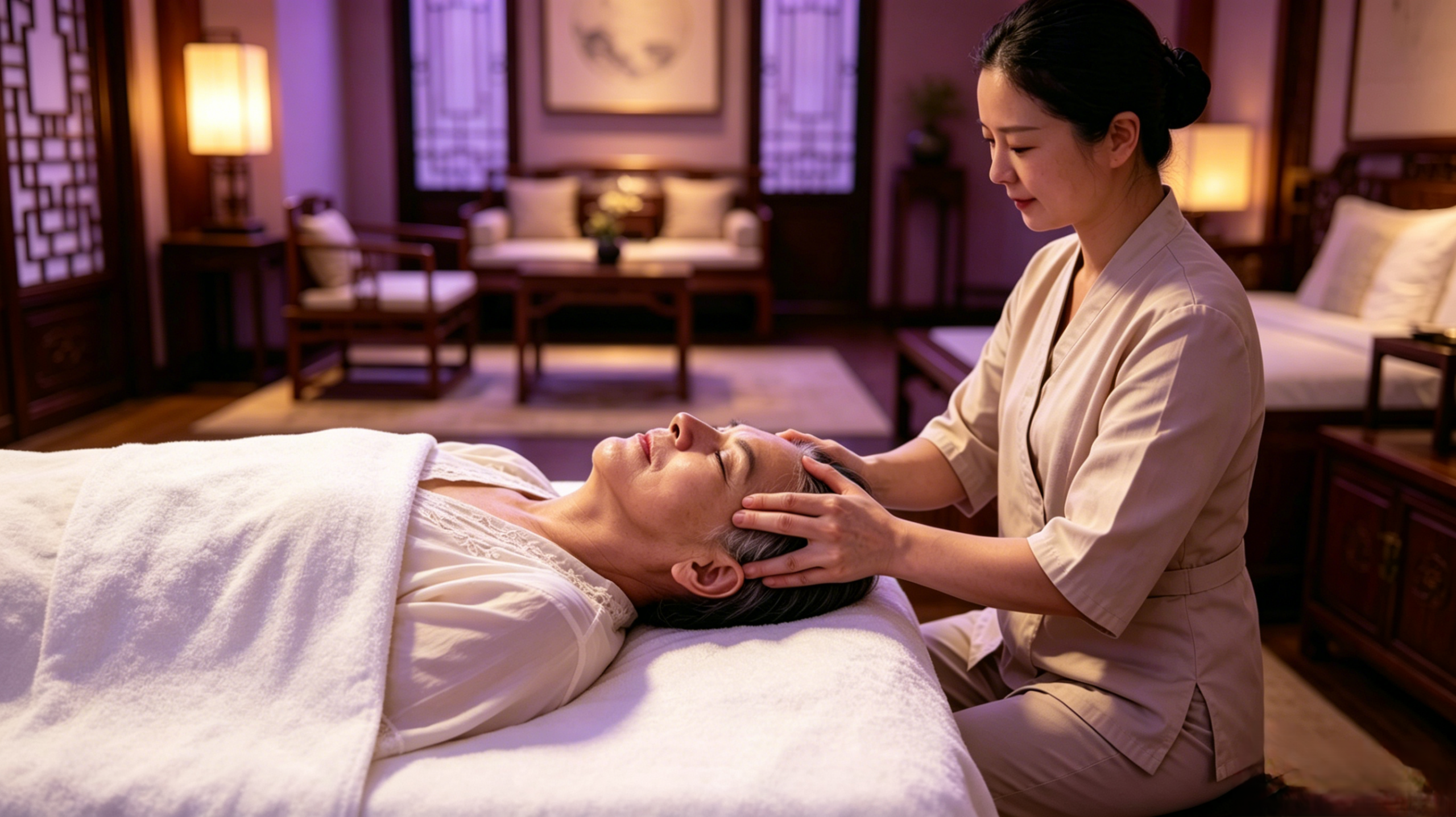
Craniosacral therapy does not “tear open” adhesions through violent pressure or stretching, but solves problems at their root by using an extremely gentle and respectful approach to body wisdom. Its recovery process follows these principles:
1. Assessment and Listening: The therapist will gently palpate your sacrum, spine, and skull with light pressure (typically less than 5 grams), listening for the cranio-sacral rhythm of your body. A weakening, asymmetry, or disappearance of the rhythm in the T4-T8 region will directly guide the therapist to locate the core restricted point.
2. Releasing fascia: The healer uses extremely subtle guidance in this area, encouraging tightened nerves and fascia tissue to relax itself. It’s like untying a knotted thread gently, rather than tearing it hard. By releasing the tension of the fascia, the tiny ability to move between the vertebrae that had been restricted is restored and the adhesion is loosened.
3. Restore Rhythmic Conduction: Once the “switch point” from T4 to T8 is unblocked, the obstructed craniosacral rhythm will resume smooth fluctuation here. It’s like clearing sediment from the riverbed, allowing life’s water to once again irrigate the entire trunk. Restored rhythms will:
Page 8
*Enhance local blood circulation and fluid exchange, bringing nutrition and removing inflammatory metabolites.
Regulate the autonomic nervous system by switching from a tense “fight or flight” (sympathetic nervous system dominance) mode to a “rest and repair” (parasympathetic nervous system nervous system dominance) mode, fundamentally relieving muscle over-tension.
Restart the body’s inherent self-healing program, allowing the body to continuously adjust toward balance after healing.
4. Holistic Re-balance: Healing does not merely address pain points. The therapist coordinates the entire system, addressing potential issues related to pelvic tilt and abnormal cranial membrane tension, ensuring the integrity and free flow of the occipital-sacral rhythm from head to sacrococcygeal region, thereby achieving long-term stability.
Craniosacral therapy, with its unique holistic perspective and gentle techniques, not only effectively releases physical adhesions in the T4-T8 region but also restores the flow of life rhythms, fundamentally promoting balance and health of body structure, nervous system, and vital energy, bringing you back a flexible and supple spine.